

AI Chatbots & Automation
2 min read

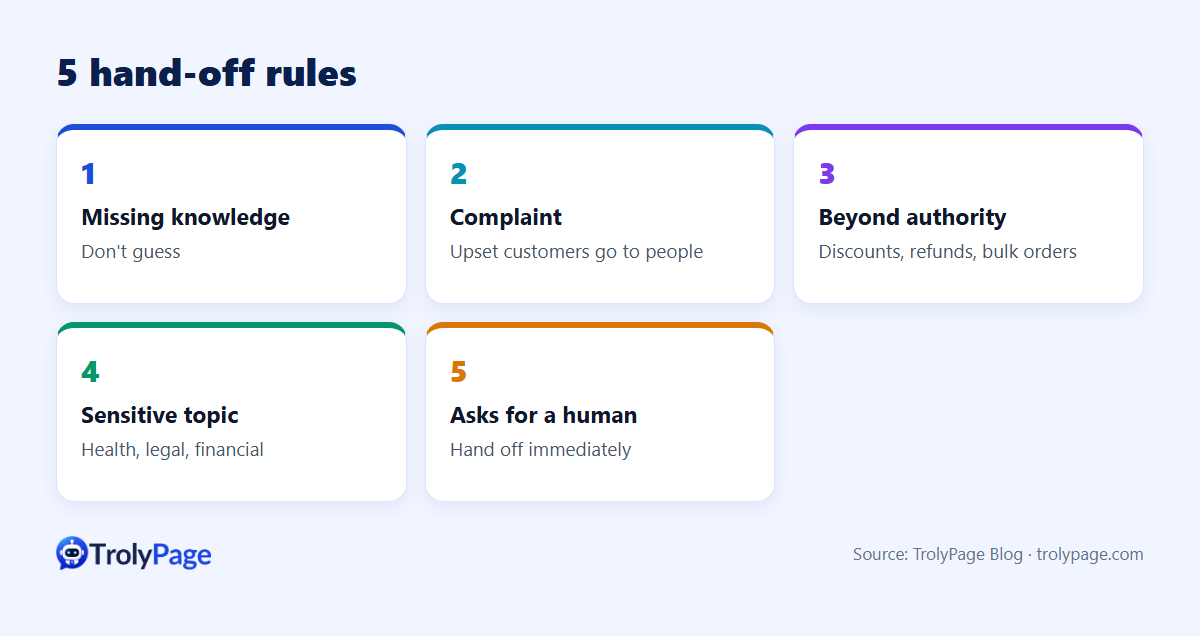
An AI chatbot should hand off to a human in five situations:
- The answer isn't in its knowledge.
- The customer is complaining or upset.
- The request exceeds its authority: custom discounts, refunds, bulk orders.
- The topic is sensitive, such as health, legal or financial.
- The customer asks for a person.
A good hand-off passes full context to the teammate and pauses the AI in that conversation.
The five hand-off rules
| Situation | Example | What the AI says |
|---|---|---|
| Missing knowledge | "Can this go in the dryer?" (not documented) | "Let me check with the team and get back to you here." |
| Complaint | "Wrong item and nobody answers!" | Brief apology; a teammate will handle it directly |
| Beyond authority | Custom discount, refund, 200 units | "A teammate who can approve this will help you." |
| Sensitive topic | Symptoms, contracts, loans | No conclusions; route to the right person or suggest a professional |
| Asks for a human | "Can I talk to someone?" | Hand off immediately |
Signs your hand-off is broken
- Teammates ask customers to repeat everything.
- The AI keeps replying while a person is typing.
- Hand-offs land outside shifts and sit unanswered.
- The AI hands off nearly everything, which usually means its knowledge is thin.
Designing the hand-off
- Write the rules into the agent's configuration.
- Make sure someone receives it: shift-based assignment. Outside hours, the AI tells customers when a person will reply.
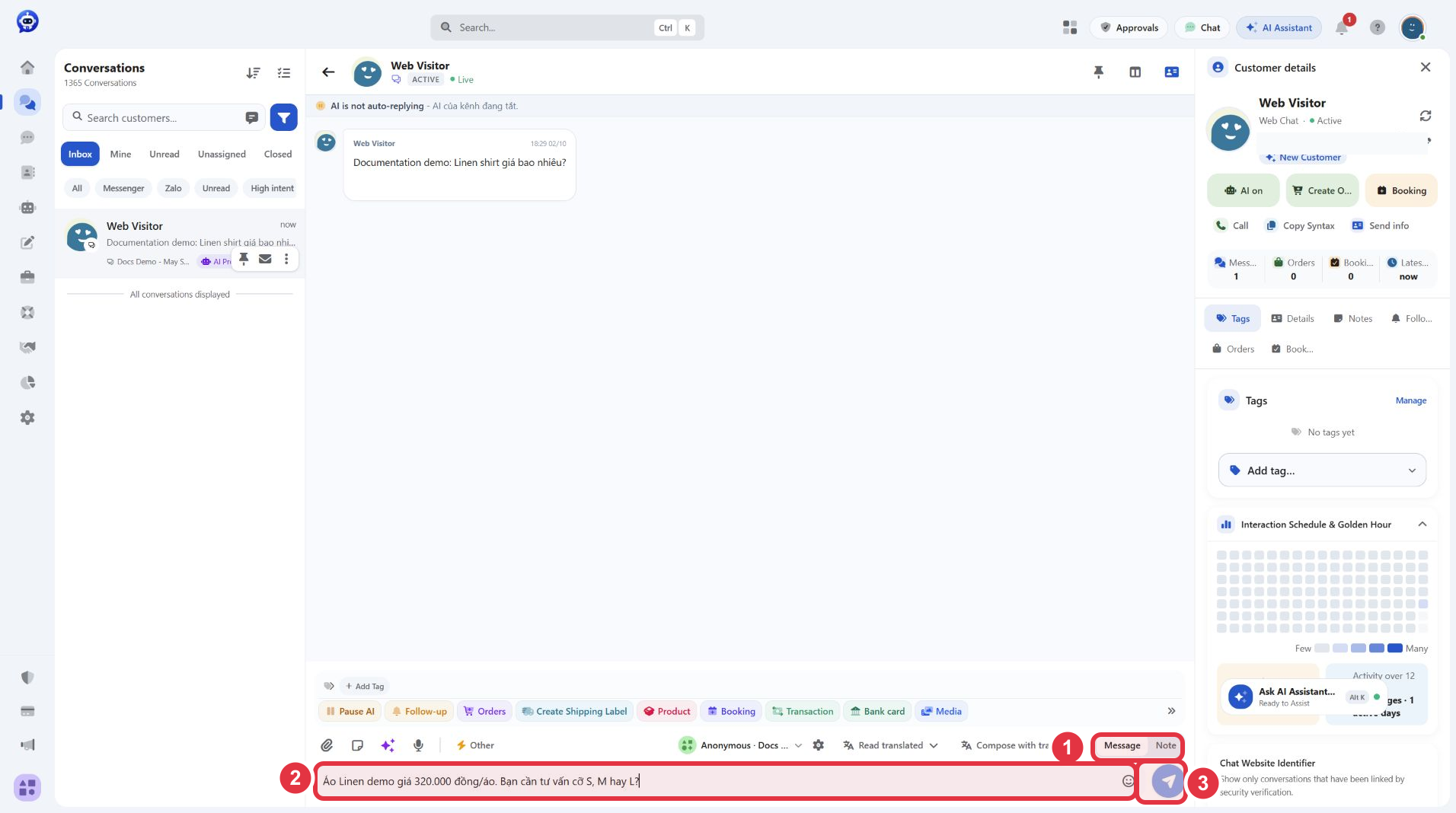
- Pause the AI when a teammate takes over. In TrolyPage, the conversation shows the AI status, and a "Pause AI" control stops automatic replies in that chat. Resuming AI is separate from assigning a teammate.
- Use internal notes: the composer's Note mode lets teammates leave context customers don't see.
- Review weekly: recurring hand-off questions become new knowledge.
What's a healthy hand-off rate?
There's no universal number. Expect a high rate in week one; it should fall as knowledge improves. A very low rate with rising complaints may mean the AI answers things it shouldn't, so read the conversations.
FAQ
Should customers know they're talking to AI?
Yes. Being transparent builds trust. Name the assistant and always offer a human.
What about after-hours hand-offs?
The AI answers what it can, records the request and sets expectations. The morning shift handles those first.
Written by the TrolyPage team. Updated November 2026.